martes, 24 de noviembre de 2020

UNIT 9: DIGITAL PHOTOGRAPHY, PORTRAIT.

 PORTRAIT PHOTOGRAPHY

Top Tips on How to Master Portrait Photography


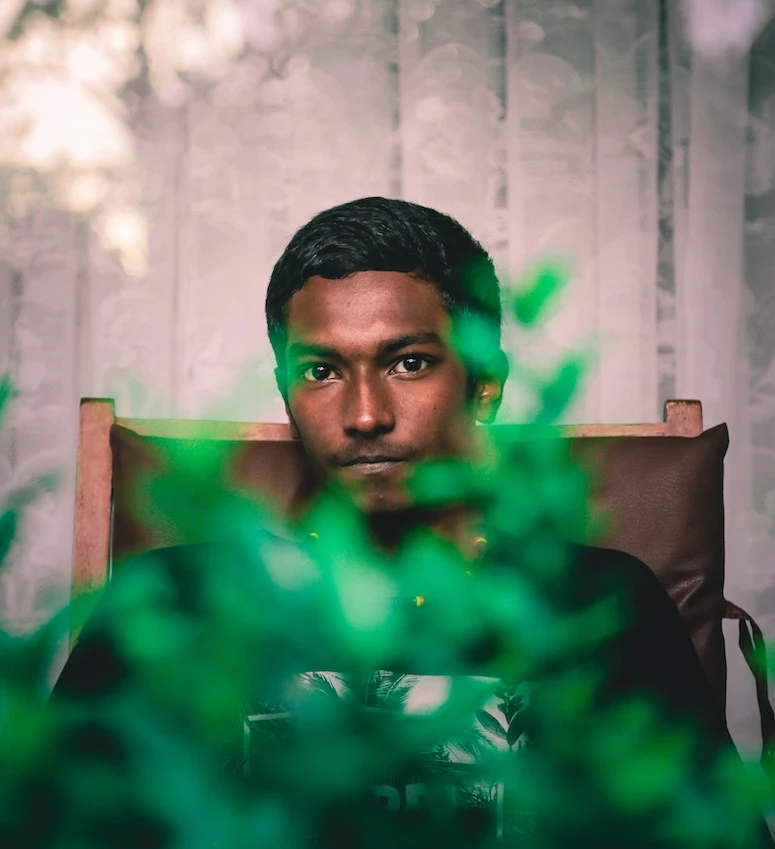
Portrait photography is the art of capturing the inherent character of your subject within a photograph. While that quizzical definition covers the basics, portrait photography goes way beyond just clicking pictures of people.


Great portrait photography is a result of combining the right technique with an artist's expression.

Technique: Using the correct camera settings, compositions, angles, lighting, backdrops, and poses.

Art: It's about capturing a stunning and emotive portrait that evokes feelings in the viewers and captivates their attention.

First practiced by artists such as Picasso, portrait paintings have a great history of storytelling. Taking great portrait photographs is the modern form of the same technique. While it requires much less effort than painting, capturing the expressions and emotions that make up good portrait photography can take time to master.

Great portrait photography is as much about following the rules and guidelines as it is about breaking out of the mold. We have put together an exhaustive list of best practices and techniques on how to take good portraits.


1. Focus on the subject

The subject is the most important aspect of portrait photography.


2. Find the right location

The location you choose for the portrait shoot is going to be a significant influence on the final results


3. Getting the pose right

Figuring out the right portrait photography poses for your subject that portrays them in the most flattering way is always a new journey.


4. Capture emotions and expressions

Artistic portrait photography is all about finding emotions and expressions in portrait pictures. Getting your subject to emote is easier said than done. Make sure that you avoid fake smiles and blank looks. A genuine sparkle in the eye, a faint smile, a confident expression - these are the recipes for creating portrait shots that will shine. Work with your subject and give them time to get into the zone. Forcing or hurrying this process will not work.


5. The background matters

The focus in portraiture, as expected, is on the subject model. However, there are more intricacies than just that. Sometimes, an interesting background can add a lot of drama to the photograph and help your subject stand out.

In most cases, though, blurring the background correctly can add more emphasis to the subject.


6. Try out different angles.

Most portraits photographs are shot by placing the camera at the eye level of the subject. Shooting at the eye level produces excellent portraiture shots with the subject's eyes becoming the focus of the photograph. However, choosing an unconventional angle can make your portraits stand out.


7. Using props for effect

Adding props to your portrait photography is a great way to add a dash of color, excitement, and impact to the shots. Using photography props creatively can completely alter the nature of the photograph. You can develop your signature style by experimenting with shapes, textures, colors of props.


8. Shoot a Series of Shots

Using the 'burst' or 'continuous shooting' mode of your camera to click a series of shots that capture the different poses of your subject in motion is a great technique.


9 Break the Rules

Understanding the rules and practicing them can be a precursor to get creative and break the rules. When you break the rules, you create unusual and unique work that would make your brand,


Let´s learn more about it!!! (Click on the image)


Top 10 Most Famous Portrait Photographers In The World (Click on the image).


CREATIVE IDEAS FOR YOUR PHOTOS


TASK 2


  1. CREATIVE SELFIE


2. FORCED PERSPECTIVE


3. PORTRAIT


jueves, 19 de noviembre de 2020

UNIT 8: THE ART OF FILMING "CAMERA SHOTS AND ANGLES" and "COMPOSITION"


CAMERA VIEW ANGLES AND SHOT SIZE

In the art of filming and photography, there is a specific vocabulary, terminology that is important to know before we get started. 

WHAT IS A FILM FRAME? 

In filmmaking, video production, animation, and related fields, a frame is one of the many still images which compose the complete moving picture. ... The term may also be used more generally as a noun or verb to refer to the edges of the image as seen in a camera viewfinder or projected on a screen.

HOW DO WE GET ANIMATION FROM STILL FRAMES? 

Watch this 2 min. video from Pixar, you will understand perfectly the process of ANIMATION.


WHAT IS A SHOT? 

In filmmaking and video production, a shot is a series of frames that runs for an uninterrupted period of time. In production, a shot is the moment that the camera starts rolling until the moment it stops. In film editing, a shot is the continuous footage or sequence between two edits or cuts. 

Camera shots are an essential aspect of filmmaking and video productions, because by combining different types of shots, angles and camera movements, the filmmakers are able to emphasize specific emotions, ideas and movement for each scene.


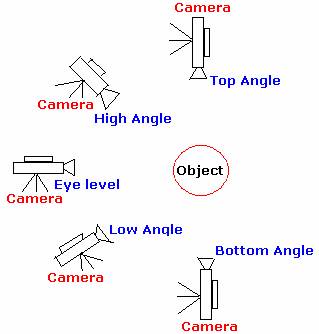
Angle indicates the physical position of the camera and the center of the lens axis. 


Becca's A2 Media Studies: Camera angles, Shots and Movement;


Resultado de imagen de types of shots and camera angles


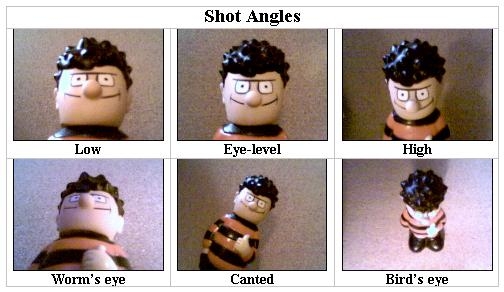
CAMERA ANGLES: LET'S SEE ONE BY ONE NOW

Source: www.studiobinder.com Click here for more info.


A. EYE LEVEL SHOT.

First, consider the most common height: the eye level shot. When your subject is at eye-level they’re in a neutral perspective (not superior or inferior). This mimics how we see people in real life -- our eye line connecting with theirs.


B. LOW ANGLE SHOT.

A low angle shot frames the subject from a low camera height looking up at them. These camera shots most often emphasize power dynamics between characters.


C. HIGH ANGLE SHOT.

In a high angle shot, the camera points down at your subject. It usually creates a feeling of inferiority, or “looking down” on your subject.


D. BIRD'S EYE SHOT OF OVERHEAD SHOT.

An overhead shot is from way up high, looking down on your subject and a good amount of the scenery surrounding him or her. This can create a great sense of scale and movement.


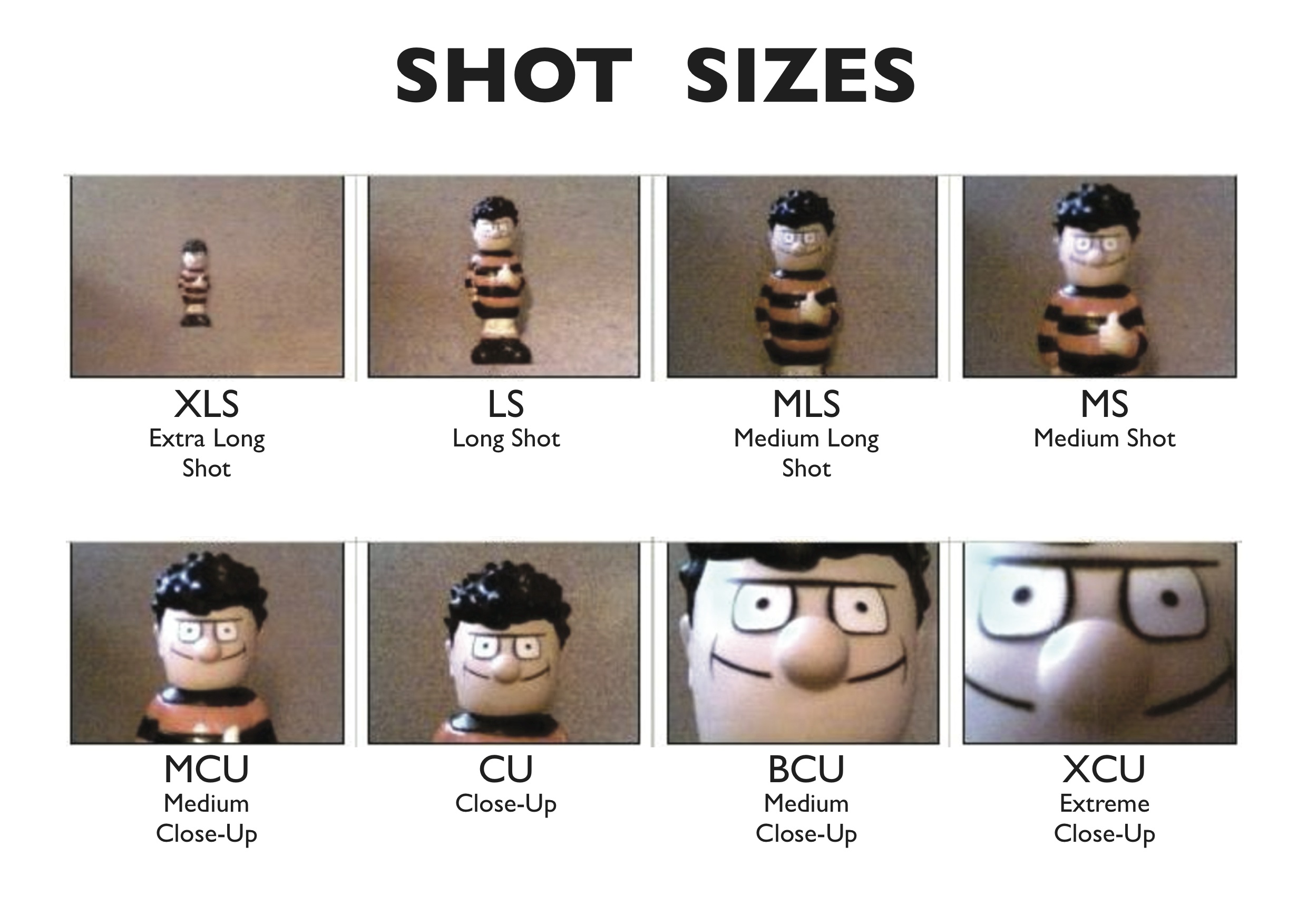
Shot size means how much of the scene is included in the picture, and whether it mainly shows the setting, people in the setting, or details of faces and things. ... Most filmmakers use standard names for shot sizes.

Camera Shots - Chart of Camera Shot Sizes Diagram Infographic - StudioBinder


Camera Shot Sizes – SFCS Media

3. PHOTOGRAPHY. COMPOSITION RULES

el febrero 17, 2019

Photography is an essential technique for transmitting visual information. As a beginner photographer you should be looking at the images made by other photographers, people whose work you admire. You sure noticed that somehow the compositions of these photographers tend to be a lot more eye catching. There is no magic wand which you can wave and your photography can become better all of a sudden. It does take a considerable amount of time and energy to develop the necessary skills to make great images. The first thing you must consider is a good understanding of the Compositional Rules of Photography. This compositional rules are not designed to remove your creativity. Once you have mastered these rules, you would be able to go beyond them, break them whenever necessary so that you can create even more captivating images and you will consider them as guides.

This year we are going to focus just in three of them:


RULE OF THIRDS: The main object is placed on one of the intersections.


RULE OF THE HORIZON LINE: You can divide the landscape in three horizontal lines.


COMPOSITION RULES TIPS


MORE ABOUT COMPOSITION (Click on the image):


A few other videos about types of camera shots and composition: 


Different photography genres


Sumarizing... plus adding a bit more information (camera movements): 


TYPES OF SHOTS IN FAMOUS CLASSIC FILMS 

20+ Types of Film Shots You Need to Know - Video School Online